Kim Barker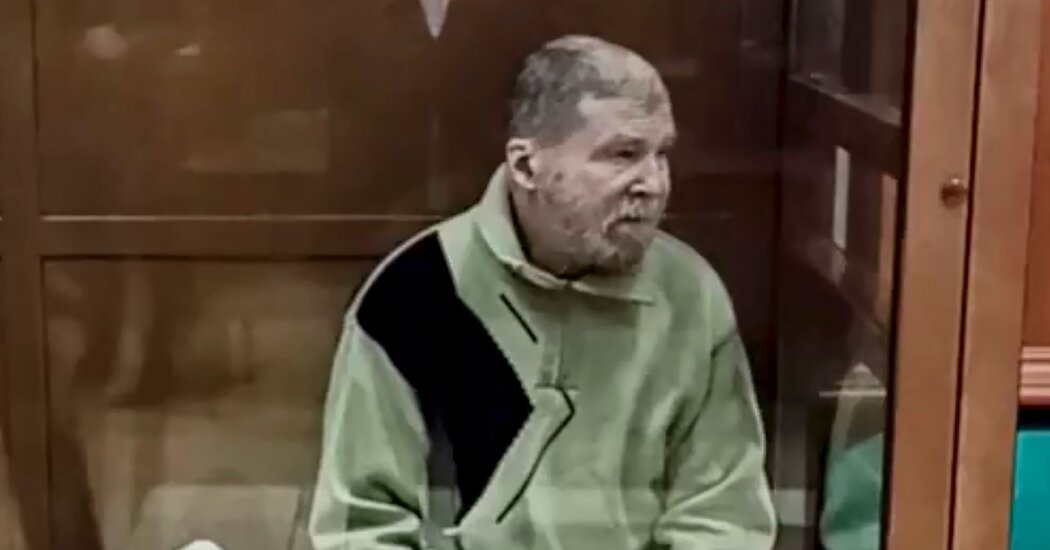
After months without contact, Stephen James Hubbard, a retired American teacher taken from his eastern Ukrainian home by Russian soldiers shortly after Russia invaded in February 2022, has been located in a Russian prison in Mordovia.
His family had no information on his whereabouts since his criminal conviction last fall. But in recent weeks, he has been able to call one of his sons.
Mr. Hubbard is the only American remaining in Russia who has been designated by the U.S. State Department as “wrongfully detained,” an indication that the United States believes the charges against him are fabricated. Given the designation, he is likely a top candidate in any potential prisoner exchange being discussed between Russia and the United States.
Mr. Hubbard, now 73, was accused of manning a checkpoint and fighting for Ukraine, and then convicted by Russia of being a mercenary last October and sentenced to almost seven years in a penal colony.
After that, Mr. Hubbard’s family was not able to find him in Russia’s prison system. In a highly unusual move, the Russian judge removed his case file, even basic information like his lawyer’s name, from public view.
Documents reviewed by The New York Times show that Mr. Hubbard is being held in the IK-12 penal colony in Mordovia, the southwestern Russian region commonly referred to as “prison land.”
In addition, sentencing documents reviewed by The Times, which have not been previously reported, outline the Russian case against Mr. Hubbard and its contention that he was fighting for Ukraine. Recent interviews with one of Mr. Hubbard’s sons and others, as well as text messages he exchanged with that son, contradict the Russian narrative.
Martin De Luca, a lawyer for Mr. Hubbard, said that his team had talked to him three times since April. On May 28, Mr. Hubbard was allowed to call another son, who lives in Cyprus, according to Mr. De Luca and Mr. Hubbard’s sister.
“He’s had a rough three and a half years,” Mr. De Luca said.
Ukrainian prisoners of war who were held with Mr. Hubbard told The Times that he had been repeatedly tortured because he was an American — beaten, forced to stand all day, given little food and poor medical care. In interviews after being released, the Ukrainians said they feared for his life. He is the only American known to have been taken from Ukraine and then jailed in Russia.
Russia’s Foreign Ministry did not respond to a request for comment. So far, the Russian government has made no official statement on Mr. Hubbard.
American officials have raised Mr. Hubbard’s imprisonment with Russian officials and asked that he be immediately released, a U.S. official recently said. The United States Embassy in Moscow has not been granted access to Mr. Hubbard, the official said, despite Russia’s obligation under international law to do so. The official spoke on the condition of anonymity because of the sensitivity of the negotiations.
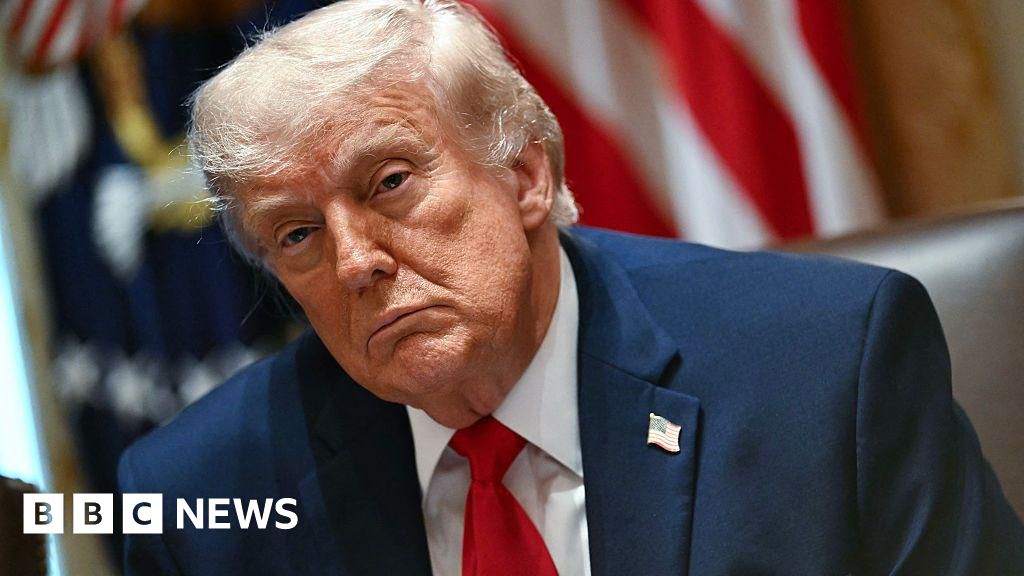
In a May 19 phone call, Mr. Trump and President Vladimir V. Putin of Russia discussed a new potential prisoner exchange, according to Russian news agencies citing Yuri Ushakov, a Kremlin aide. Mr. Ushakov told reporters that the two leaders had agreed to prepare a humanitarian prisoner exchange of nine people from each side, calling it “an important humanitarian action.”
The United States has accused Russia of inflating and inventing criminal charges against Americans so they can be traded for Russians held elsewhere or used as international bargaining chips.
Mr. Hubbard grew up in Michigan, served in the Air Force in California, married young and divorced. He then married a Japanese woman he met in Washington State and moved to Japan, where he taught English. Eventually, the couple divorced.
In 2012, Mr. Hubbard retired to Cyprus, the home of Joseph Coleman, a son from his first marriage. That is where Mr. Hubbard met a Ukrainian woman named Inna, following her to the eastern city of Izium. He earned money by teaching English to a few Japanese students online.
Mr. Hubbard was alone at home when the Russians launched their full-scale invasion on Feb. 24, 2022.
“He was, in hindsight, too optimistic, I suppose,” said Hisashi Tanaka, 36, Mr. Hubbard’s son from his second marriage, in a recent interview. “He was going to wait it out. He thought he wouldn’t get into too much trouble considering his age and being a civilian.”
The day the war started, Mr. Hubbard didn’t seem to be initially aware of what was happening, his son said.
“Don’t get caught in the crossfires!” Mr. Tanaka, who lives in Japan, wrote him on Skype.
“I suppose that I should read the news,” responded Mr. Hubbard, who had just celebrated his 70th birthday. “It is peaceful here, so far.”
The Russians say Mr. Hubbard signed up the next day for the regional territorial defense unit at a recruitment center at a kindergarten in Izium, to earn at least $1,000 a month, according to the sentencing documents reviewed by The Times.
The documents claim Mr. Hubbard told recruiters he felt healthier than many younger people. “In fact, Hubbard looked sporty and very fit for his age,” the documents say.
The Russians said Mr. Hubbard was then trained in combat and how to handle weapons and explosive devices. The documents say that he was given the call signs — nicknames — “Samurai” and “Ninja,” and that he manned a checkpoint on a bridge over a river. The Russians also contend that Mr. Hubbard stopped working for the territorial defense unit after a few weeks because he feared for his life, and that they arrested him inside the home of an acquaintance in April 2022.
But messages between Mr. Hubbard and Mr. Tanaka in Japan, first on Skype and then through texts on the phones of acquaintances of Mr. Hubbard, show no evidence of Mr. Hubbard signing up for the military. He repeatedly told his son that all was well.
“I am sitting in a church now,” he wrote on Feb. 27. “Let us talk a little later, if you please.”
He gave daily updates of his life.
Most of the shops were sold out, he wrote, yet he managed to buy caviar “for nutrition.” A monk said he could use the church bomb shelter. The road between Kharkiv and Izium, also spelled as Izyum, had been cut. Still, he taught English lessons online to Japanese students when he could.
“Good night,” he wrote Mr. Tanaka on March 2. “A warplane flew over Izyum while I was teaching my lesson. I heard an explosion. I was told that the natural gas plant was hit.”
The heat went off. The electricity went out. He had no water. “Must go out,” Mr. Hubbard wrote his son on March 4. “I am well but cannot communicate much.”
Mr. Hubbard’s phone ran out of credit and it was impossible to refill. He asked friends in Ukraine to send messages to his son, and seemed particularly worried about his students. On March 21, he wrote: “Tell my students that I am still unable to give English lessons.”
“I am still well,” he wrote March 26. And again on March 30: “I am well.”
The last message, sent from a friend’s phone, came a few days later, just after the Russians had seized the town of Izium: “I am well, waiting for the war to end.”
Nataliya Vasilyeva and Julian E. Barnes contributed reporting.

 admin
admin